
A series of essays & companion reflections
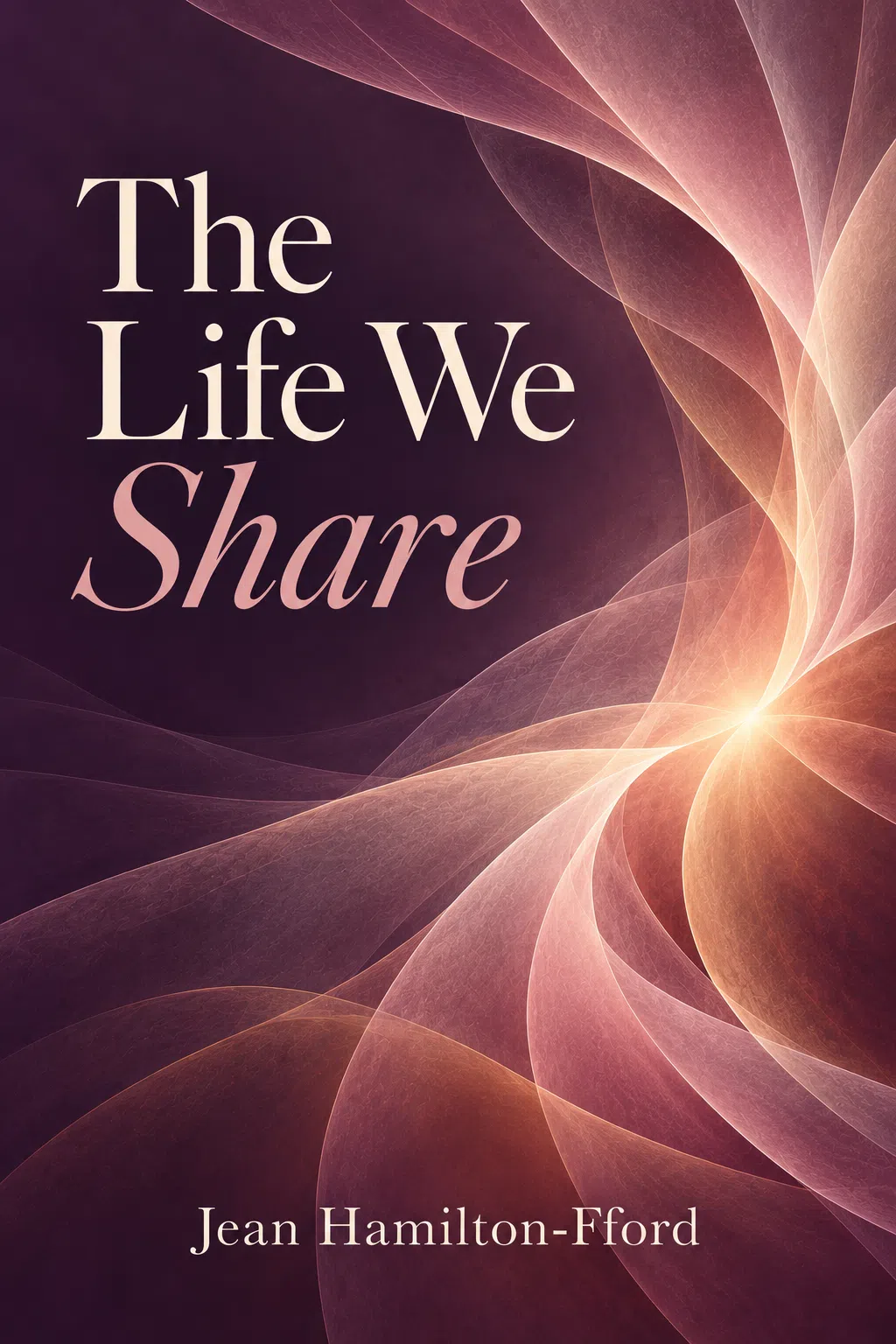
The Life
We Share
What if the life moving through each of us is less separate than we’ve been taught to believe? An exploration of awareness, the body, and what becomes possible between us.
The Invitation
A little closer
to life itself.
We speak of connection as though it were something we have to manufacture. Yet now and then, in the middle of an ordinary day, another person’s joy catches in us. Their pain does too.
These essays begin with a quiet possibility: perhaps our lives are distinct without being separate. Perhaps the body knows more of that conversation than our thoughts have managed to put into words.
There is room here for curiosity, disagreement, tenderness, and the untidy business of being human.
Begin here · Essay 01 settings
01
The opening essay
The Life We Share
Someone enters the room and the room changes. Perhaps that is a more honest place to begin than a grand declaration about oneness. The first essay opens the inquiry through what we can recognize in a life with other people.
explore the series outline
Twenty essays · Four movements
Follow the thread.
Begin anywhere that calls to you. Open an essay title to see its central inquiry and the three shorter reflections that will accompany it. This is the series map; the full writing will arrive as each piece is developed.
Movement One
The recognition
Five Essays
01
The Life We Share
Unity enters through a recognizable human encounter, while leaving room for distinct lives.
02
The One Who Notices
Awareness is present as thoughts, feelings, and sensations change.
03
There Is No Arrival
Enlightenment as recognition rather than an extraordinary event to acquire.
04
Who Am I Before the Story Begins?
Identity can be seen more openly without dismissing the history that shaped a person.
05
The Life We Share
Shared being alongside each person’s particular view of life.
Movement Two
The body enters the conversation
Five Essays
06
The Conversation Begins in the Body
The body may register a pattern before conscious language arrives.
07
What Thought Has Yet to Hear
An inquiry into unconscious depth as it appears through sensation, habit, and response.
08
The Mind Is Larger Than the Brain
A philosophical inquiry into mind and lived experience, while taking the brain’s role seriously.
09
When Recognition Meets an Old Pattern
Recognition may be immediate while embodied patterns still need time and tenderness.
10
A Body Is Not an Obstacle to Being
Physical limits and fatigue belong in the conversation about a human life.
Movement Three
The life between us
Five Essays
11
You Are Not an Extension of Me
Shared being honors another person’s distinct feelings and choices.
12
What Happens Between Us Matters
Words, silences, and choices shape the conditions another person lives in.
13
Love Without Erasure
Love can recognize shared being and still leave room for boundaries and difference.
14
When We Hurt One Another
Unity cannot be used to minimize harm or hurry someone past it.
15
The Stranger Is Someone’s Whole World
A brief encounter offers only a glimpse of another person’s life.
Movement Four
Living what we recognize
Five Essays
16
Our Systems Have a Way of Seeing People
Institutions reveal their assumptions about human worth in everyday decisions.
17
The Living World Is Not Elsewhere
Shared life extends into our relationship with land and the more-than-human world.
18
The People Who Carry the Day
Caregiving and unseen work make interdependence impossible to ignore.
19
What We Make Enters Other Lives
Creative work travels into the experience of people we may never meet.
20
The Life We Share Is Here
The inquiry returns to the ordinary day and the next encounter.
the collected essays
The whole series,
in one place
When the final essay has been shared, all twenty will be gathered into one downloadable volume. Read them in order, return to a passage that stays with you, or carry the collection into a quiet afternoon.
The collection will contain the twenty original essays.
Available when the series is complete.
An Open Invitation
Perhaps we were never as
far apart as we thought.
Start with the first essay. Stay with whatever stirs.
Bring your own lived experience into the conversation.